
Tire Pressure, Rotation, Alignment: A Beginner’s Guide
By Rav ·
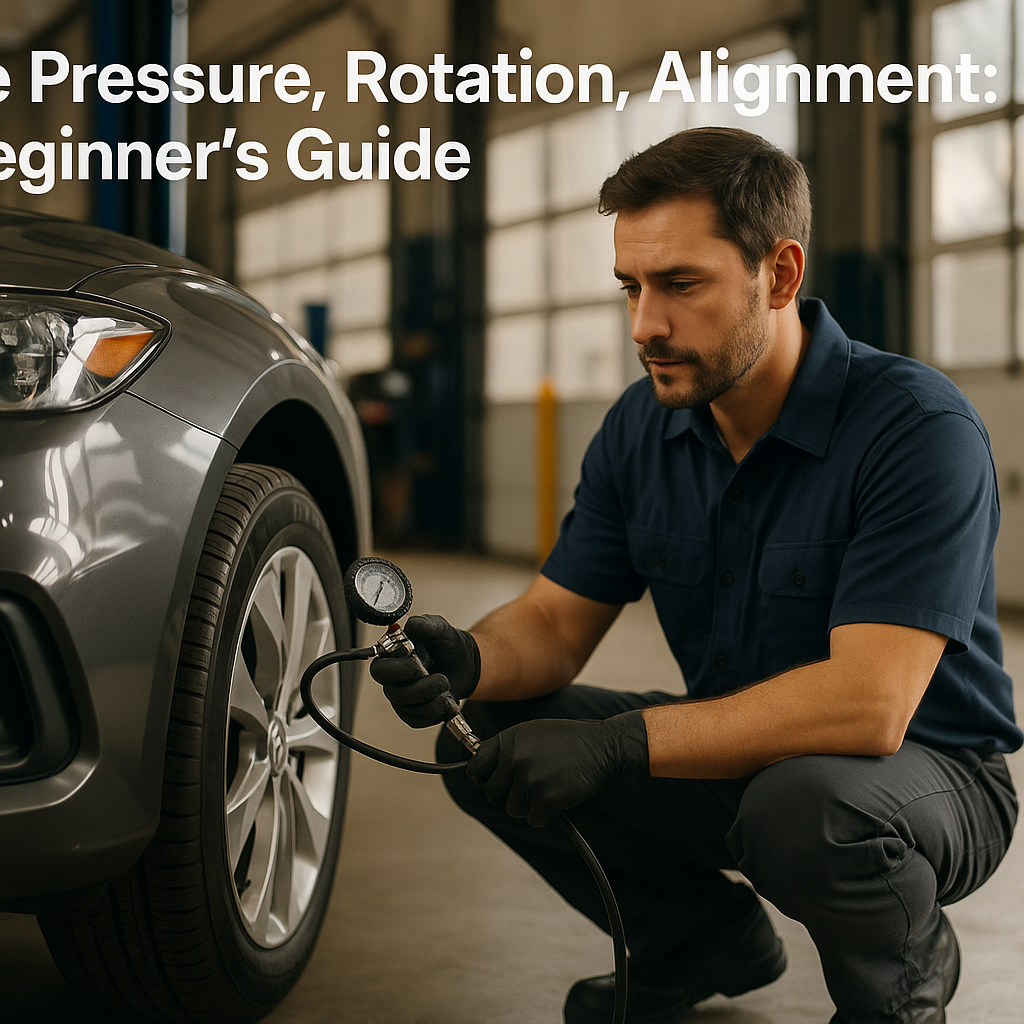
Tires are the only part of your vehicle that touches the road, so small maintenance habits can make a big difference. For beginners, three terms come up again and again: tire pressure, tire rotation, and wheel alignment. Each one affects safety, braking, ride comfort, fuel economy, and how long your tires last.
This guide breaks down what each service is, why it matters, and how to recognize when something is off—especially with Ontario’s potholes, temperature swings, and seasonal tire changes.
## Tire Pressure Basics: The Easiest Win
Tire pressure is the amount of air inside your tires, measured in PSI (pounds per square inch). Your vehicle has a recommended pressure set by the manufacturer. You can find it on a label inside the driver’s door jamb, in the owner’s manual, and sometimes inside the fuel door. Use the door-jamb label as your primary reference.
A common mistake is inflating to the number printed on the tire’s sidewall. That number is the tire’s maximum pressure, not the recommended setting for your vehicle.
Correct tire pressure matters because it affects how the tire contacts the road. Underinflated tires flex more, generate heat, wear faster on the edges, and can increase fuel consumption. Overinflated tires can reduce traction, make the ride harsher, and wear faster in the center of the tread.
In Ontario, pressure changes with temperature. As a rule of thumb, tire pressure can drop about 1 PSI for every 10°F (about 6°C) decrease in ambient temperature. That means your tires can lose several PSI when fall turns to winter, even if there’s no leak.
Best practices:
Check pressure monthly and before long highway drives.
Check when tires are cold (parked for a few hours). Driving warms the air and increases PSI.
If your vehicle has a Tire Pressure Monitoring System (TPMS), treat it as a warning system, not a replacement for a gauge.
If the TPMS light comes on in cold weather, verify pressures first. Many times it’s simply seasonal contraction.
## How to Know When Tire Pressure Is Wrong
Some symptoms are subtle, and others are immediate. Watch for:
TPMS warning light (steady typically indicates low pressure; flashing can indicate a system fault)
Vehicle feels “squirmy” or less stable at highway speed
Longer stopping distances or reduced grip in wet or snowy conditions
Uneven tire wear across the tread
Frequent need to add air (could indicate a slow leak, valve stem issue, or bead leak)
If you’re topping up one tire more often than the others, it’s worth having it inspected. In Ontario, temperature shifts can mask a slow leak until it becomes more noticeable.
A quick tip for accuracy: keep a quality digital or dial gauge in the glovebox. Gas-station gauges vary, and cold weather can make them less reliable.
## Tire Rotation: What It Is and Why It Matters
Tire rotation is the practice of moving tires from one position on the vehicle to another—typically front to rear and side to side depending on drivetrain and tire type. The goal is to even out tread wear.
Tires do not wear evenly because each position does different work. Front tires often wear faster on front-wheel-drive vehicles because they handle driving forces and most steering. On rear-wheel-drive vehicles, the rear tires often wear faster. All-wheel-drive spreads the work around, but it can still wear unevenly depending on alignment, driving style, and road conditions.
Most vehicles benefit from rotating tires about every 8,000 to 12,000 km, or at every oil change interval if that matches your maintenance schedule. If you drive on rough roads, do lots of city driving with turns and braking, or use softer winter tires, more frequent checks are smart.
Rotation patterns depend on your setup:
Non-directional tires: common rotation patterns can move tires left-to-right.
Directional tires (with a rotation arrow): typically rotate front-to-back on the same side only.
Staggered fitment (different front and rear sizes): often cannot be rotated front-to-back.
Why it matters for beginners: a simple rotation can add meaningful life to a set of tires and help keep handling predictable. It also helps you catch problems early, because a technician can spot unusual wear before it becomes expensive.
## Wheel Alignment: The Hidden Cause of Fast Wear
Wheel alignment is the adjustment of suspension angles so the wheels point and sit the way the manufacturer intended. Alignment affects straight-line stability, steering return, braking feel, and tire wear.
The three main alignment angles are:
Toe: whether the tires point slightly inward or outward when viewed from above.
Camber: the inward or outward tilt of the tire when viewed from the front.
Caster: the angle that affects steering stability and return-to-center.
You don’t need to memorize the angles, but you should know the symptoms of misalignment:
Vehicle pulls to one side on a flat, straight road
Steering wheel is off-center when driving straight
Rapid or uneven wear (especially feathering or wear on one edge)
Steering feels twitchy or unstable at highway speeds
You recently hit a pothole, curb, or road debris
Ontario drivers often see alignment issues after winter because potholes and frost heaves can knock angles out of spec. Even a small toe issue can scrub tread quickly, shortening tire life.
A key point: alignment is different from balancing. Balancing corrects vibration by equalizing wheel and tire weight distribution. Alignment corrects the direction and angles the wheels travel.
## Recommended Schedule and What to Ask For
If you’re building a simple maintenance routine, use this as a practical baseline:
Tire pressure: check monthly and with major temperature changes.
Rotation: every 8,000 to 12,000 km, or as recommended in your owner’s manual.
Alignment: check annually, after major impacts (potholes/curbs), after suspension work, or when you see uneven wear or pulling.
Seasonal tire swaps are an ideal time to review everything. When installing winter tires in the fall or switching back in spring, ask for:
A pressure check set to the door-jamb specification
A quick tread and wear inspection
Rotation if the tire type and sizes allow
An alignment check if you noticed pulling, an off-center steering wheel, or you’ve had a significant pothole strike
If your vehicle is all-wheel-drive, consistent tread depth matters. Large differences in tread depth between tires can stress driveline components. Rotations and timely replacements help keep tread wear even.
## Beginner Mistakes to Avoid (And How to Get It Right)
Many tire issues start with small misunderstandings. Avoid these common pitfalls:
Using the sidewall PSI instead of the vehicle’s recommended PSI. Always use the door-jamb label.
Ignoring slow leaks. If you add air repeatedly, book an inspection.
Rotating too late. Once uneven wear patterns set in, rotation can’t always “undo” them.
Skipping alignment after impacts. If you hit a deep pothole and the steering feels different afterward, don’t wait for tires to wear out.
Assuming TPMS means you’re safe. TPMS typically alerts when pressure is significantly low, not when it’s slightly off.
Mixing different tire types or tread depths without a plan. For best handling and predictable braking, use matched sets and keep wear even.
If you’re unsure where to start, begin with tire pressure. It’s quick, inexpensive, and it affects everything else. Then keep rotation and alignment on a routine schedule. Together, these three basics can help your tires last longer, your vehicle drive straighter, and your day-to-day commuting feel safer—whether you’re navigating Toronto traffic, 400-series highways, or cottage-country roads.